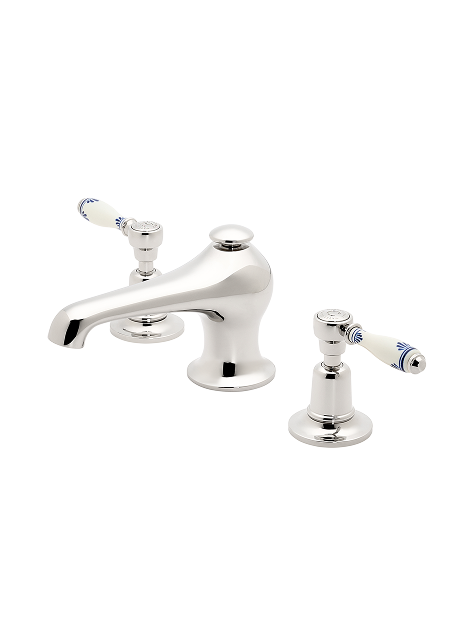
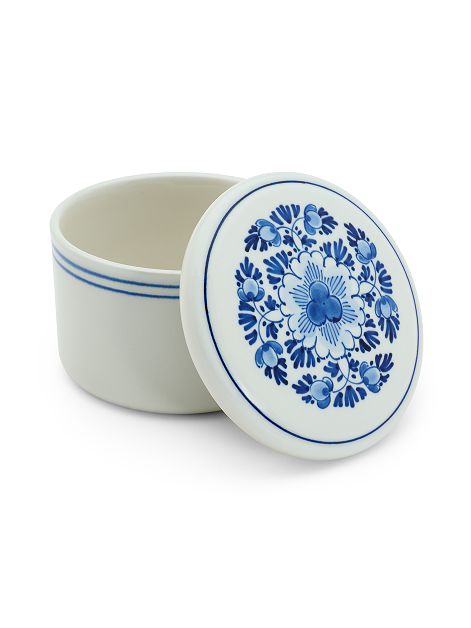
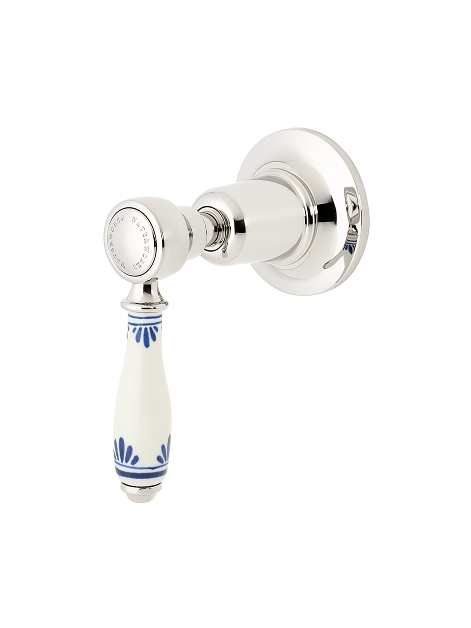
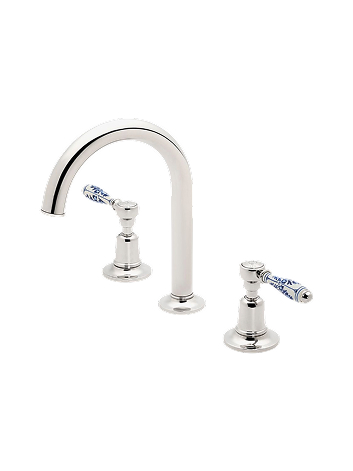
Waterworks x Royal Delft: Hand-Painted Delftware Fittings for the Easton Collection
Where Two
Traditions Meet
Royal Delft is the storied Dutch house behind the hand-painted blue-and-white earthenware the world has come to know as Delftware: a craft and a look that has shaped English taste for centuries.
During the Edwardian era—the same period that shaped Easton’s own design language—architects, decorators, and collectors looked to Holland for inspiration, drawn to its balance of restraint and ornament, artistry and comfort. Dutch ceramics found their way into English country houses, where hand-painted vessels and chargers were displayed alongside fine furniture, silver, and textiles as expressions of cultivated living.
What resonated was the craftsmanship behind the decoration: a respect for tradition, and the conviction that beauty belongs in everyday life.
More than a century later, those same ideals still shape our design philosophy at Waterworks.
At first glance, Waterworks and Royal Delft occupy different worlds. One is known for fittings and bath furnishings, the other for centuries-old hand-painted ceramics. Yet both share a commitment to craft as a living discipline—one sustained through generations of makers who continue to refine their work while remaining true to its origins.
Founded in 1653, Royal Delft remains the last surviving Delftware factory from the Dutch Golden Age—the sole manufactory still producing hand-painted earthenware in Delft, The Netherlands. Its painters continue to work by hand, applying intricate motifs and brushwork that have defined the craft for centuries. Waterworks has long approached design through a similar lens, creating enduring fittings that draw upon historical precedent while remaining relevant to contemporary interiors.
The collaboration emerged from this shared perspective. It began with materials science, well before aesthetics entered the conversation.
Royal Delft is the storied Dutch house behind the hand-painted blue-and-white earthenware the world has come to know as Delftware: a craft and a look that has shaped English taste for centuries.



In an era increasingly defined by speed and uniformity, hand-painted decoration offers something different: individuality, permanence, and a connection to traditions that have endured for centuries.
In an era increasingly defined by speed and uniformity, hand-painted decoration offers something different: individuality, permanence, and a connection to traditions that have endured for centuries.
Earthenware presents fundamentally different technical behavior from the porcelain historically associated with plumbing applications—greater thermal sensitivity, more variability in kiln movement. To meet Waterworks’ tolerances, Royal Delft developed an entirely new material toolkit: custom glaze-dipping instruments, specialized finishing tools, and 3D-printed molds conceived exclusively for these components. Even the Pearl colorway underwent reformulation; the glaze recalibrated to achieve a warmer, more considered result.
What justifies that technical investment is what distinguishes the work. Unlike porcelain, in which surface decoration is applied above the glaze, Royal Delft’s painting is executed beneath it—a process that produces greater durability and greater expressive depth.
The creative research originated in Amsterdam. Our design team conducted an extended study at the Rijksmuseum, then at Kramer Arts and Antiques, the antique dealer holding what is understood to be the world’s largest collection of historical Delftware, spending considerable time with dishes, vases, and tiles to construct a working vocabulary of border motifs, centered compositional elements, and the layering logic that gives Delft its characteristic visual density. Royal Delft’s own archive deepened that inquiry until a coherent design lexicon emerged, developed further in close collaboration with the studio artists.
One historical discovery became the collection’s conceptual anchor. During their research, our design team found themselves drawn repeatedly to a particular body of work: pieces that occupied an unusual middle ground between historic tradition and modern sensibility. These works shared a single origin—an art director brought in at the turn of the twentieth century to bridge Royal Delft’s legacy with the formal language of a new era. His work became the foundation of the new patterns.
From research to final design, Waterworks and Royal Delft worked side by side—sketching, adjusting pattern and scale, and prototyping together—to create exclusive designs shaped equally by Royal Delft’s centuries of expertise and the Waterworks point of view.


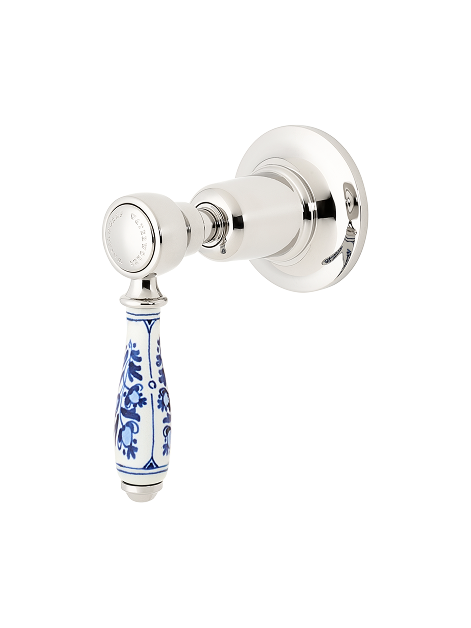
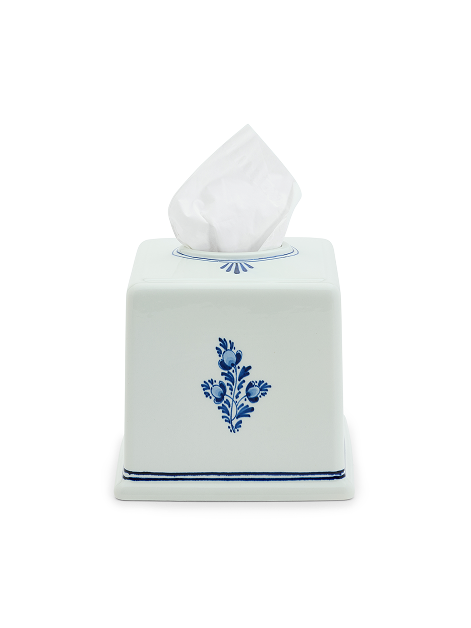
Each piece begins as a canvas for Royal Delft’s Master Painters whose brushwork transforms functional objects into expressions of craft. Every application is executed entirely freehand; the components too small to accommodate stenciling, each one particular to the hand that produced it. For the accessories—soap dispenser, tumbler, and waste can—the silhouette was derived from Easton’s own gland cover, so that each hollowware form carries a shared formal DNA with the fittings it accompanies. Each countertop piece bears a mark of authenticity on its base, left by the Royal Delft artist who painted it.
The resulting designs celebrate the subtle irregularities and human touch that only handwork can achieve. No two are exactly alike.
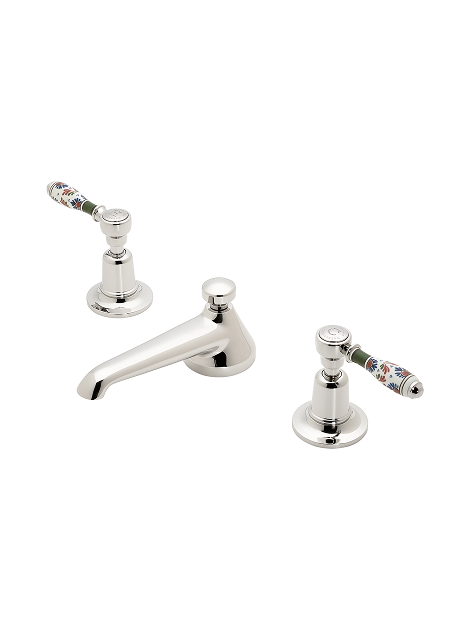
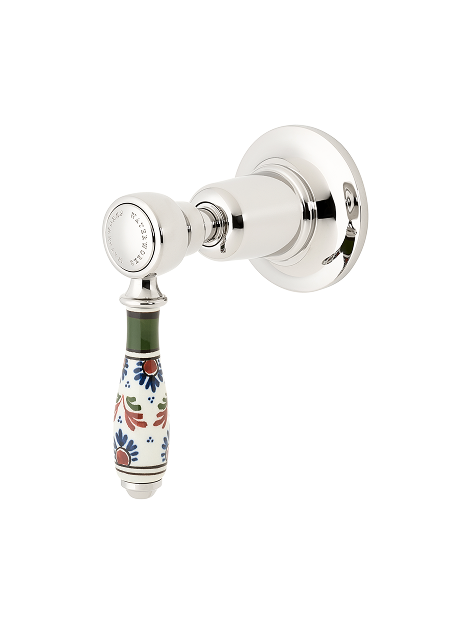
Each patterned handle is individually hand-painted by Royal Delft’s master artisans using techniques refined over centuries. By its very nature, this exacting handwork allows for only a select number to be created each year—each one bearing the singular touch of the artisan who painted it.
Heritage meets heritage. Ceramic meets metal. Ornament meets utility. The Waterworks x Royal Delft collection is, in many ways, a continuation of a dialogue that began centuries ago—a weaving of two design legacies, brought together through a shared belief in the lasting value of craft.
“We kept coming back to the same handful of pieces, before we knew why. Learning they shared one hand made sense of it. Someone had already done this exact work a century ago, honoring what came before while making something new. That discovery validated our instinct to do the same.”
Deanna Amorello
Waterworks Vice President, Product & Design

Collectors have always prized Royal Delft for more than its beauty. Provenance matters just as much: the hand behind the piece, and the maker who stood by it. That same signature now lives on every Easton accessory, connecting it to a lineage that runs back to 1653.